

JUST AS THE ALBANIAN Skanderbeg (Gjergj Kastrioti: c1405-1468) heroically resisted the invasion of his country by the Ottomans in the 15th century, Khwaja Safar, also an Albanian, bravely led forces opposed to the Portuguese, who were attacking his adopted country, Gujarat (India) during the 16th century.
Khwaja Safar was a soldier; a merchant; the treasurer of Cairo; advisor to the Sultans of Egypt and Gujarat; and the Governor of the city of Surat. His parents were Albanian, yet he is remembered by a name which is not Albanian. You can discover why this is when reading my book about his extraordinarily fascinating life. “An Albanian in India” is available both as a paperback and a Kindle (eBook) from Amazon: https://www.amazon.co.uk/dp/B0D7HX2B8Q – more about the book below the image.
MORE ABOUT THE BOOK:
At the end of the 15th century, the Portuguese discovered a sea route between Europe and the Indian Ocean via the Atlantic and the Cape of Good Hope. This allowed them to transport highly prized goods (such as spices and jewels) to Portugal from India and further east, without them having to pass overland through the Middle East and Mediterranean countries. During the overland journey, the goods attracted high customs duties that increased their final prices. The route via the Atlantic avoided these taxes and increased the profits that the Portuguese could make when they sold these products in Europe.
Within the Indian Ocean, the Portuguese encountered competitors: traders and ships from places including Egypt, Turkey, Persia, Gujarat, and Arabia. For at least 50 years, the Portuguese used force ruthlessly to dominate trading – to stifle free trade – in the Indian Ocean. They achieved this by aggressively imposing conditions that made it both costly and difficult for their competitors to trade.
This book is about an adventurous man, Khwaja Safar, who offered his services to the Egyptians, Turks, and Gujaratis during their attempts to combat and limit the activities of the Portuguese. He was born in Europe, a Christian of Albanian parentage. Later, he converted to Islam in Egypt, and played a significant role in trying to evict the Portuguese from 16th century India.
Khwaja’s life began in Puglia. After serving as a soldier in Italy, he went to sea as a trader. During his travels, he reached the Red Sea, where he was abducted by a Mamluk admiral and taken to Cairo. From Egypt, he travelled to Yemen, and then to Gujarat in western India, where he became a formidable opponent of the Portuguese.
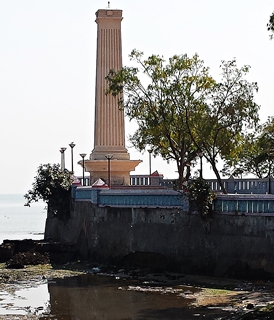
Adam Yamey’s book, illustrated with maps and pictures, describes Khwaja Safar’s exciting life and the author’s visits to places where he made his mark in India.
 GUJARAT, DAMAN, and DIU