Le Corbusier in Gujarat

A famous Swiss-French architect, artist, and writer designed several fine buildings in Gujarat. They are worthy of a visit.

CORBU 0
Charles-Édouard Jeanneret (1887 1965), better known as ‘Le Corbusier’ is amongst my favourite 20th century architects. Over the years, I have visited many of his buildings in France, my favourite being his organic, sculptural Chapel of Notre-Dame-du-Haut at Ronchamp. Le Corbusier is well-known in India, which he visited regularly (starting in 1951). In India, he is best-known for designing the city of Chandigarh in northern India.

Ahmedabad, the largest city in Gujarat is home to four notable buildings designed by Le Corbusier. They were built at various dates between 1951 and ’56.

CORBU 2

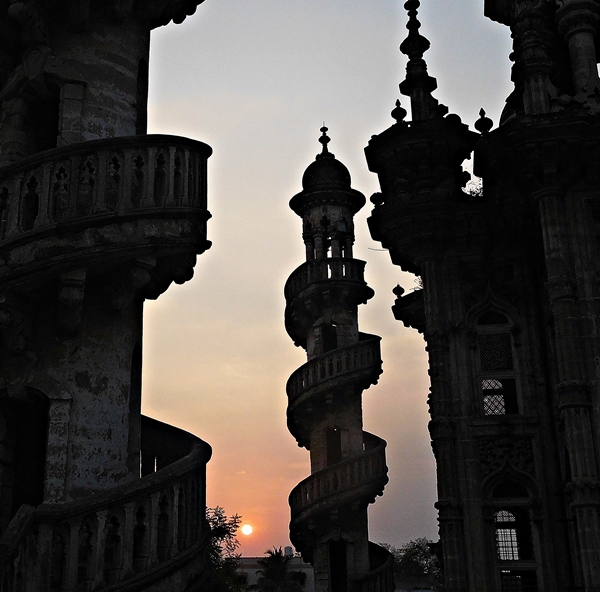
During my recent visit to Ahmedabad, I managed to see two of them. The Sanskar Kendra Museum (1951-56) and Mill Owners’Association Building (1951). Sadly, I was only able to see their fine exteriors, but they confirmed my admiration for their famous architect.

CORBU 1

Le Corbusier enjoyed India and her architecture. After visiting the extensive 15th century royal complex at Sarkhej Rauza (on the edge of Ahmedabad), wrote: “You don’t need to travel to the Acropolis. You have everything here.”

CORBU 3

Lovers of Le Corbusier’s architecture and of other adventurous 20th century architecture would be well-advised to visit Ahmedabad because many notable modern architects, both Indian and foreign, have designed buildings that now help to adorn the city. I will write about some of these in the future.

CORBU 4

Some views of Diu

DIUV 0

The island of DIU is on the south coast of the Saurashtra peninsular in the Indian state of Gujarat.

DIUV 9

Diu was a Portuguese colony from the 15th century until 1961, when it was ‘liberated’ by Indian armed forces.

DIUV 00

DIUV 14

The island is rich in arrchitecture dating back to the golden age of Portugal

DIUV 13

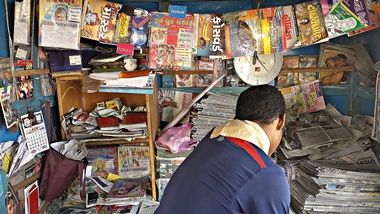
We could only find one newspaper seller in Diu. He opened for a few hours of the day only. Diu is a sleepy place.

DIUV 3


DIUV 4

The extensive fort of Diu was built by the Portuguese. Part of it is now used as a local jail.

DIUV 1


DIUV 11

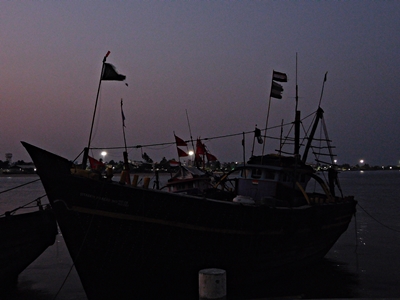
Many fishing vessels moor alongside the city of Diu.


DIUV 6


DIUV 7

Bird-spotters can enjoy standing by the wateride, looking for various different species.

DIUV 2


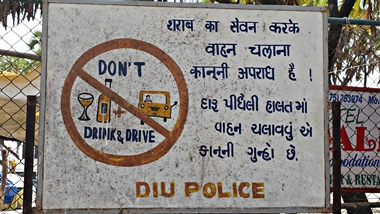
A long road bridge connects Diu Island to Ghoghla on  the mainland. Beyong Goghla, there is a frontier post between the Union Territory of Diu and the State of Gujarat. The Gujarati policemen are on the look-out for alcohol being smuggled into thier teetotal state from Diu, where ‘booze’ is permitted.

DIUV 12

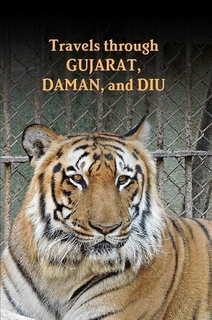
You can learn more about DIU in “TRAVELS THROUGH GUJARAT, DAMAN, AND DIU” by Adam Yamey.

It is available from lulu.com, bookdepository.com, amazon, and on Kindle

DIUV 15

Going vegetarian in Gujarat

veg 1


Travellers visiting Gujarat should be aware that the majority of food served in the state is vegetarian. In bigger places like Ahmedabad and Baroda, finding non-vegetarian food is less of a problem than in smaller places. If you visit Bhavnagar, the Nilambagh Palace Hotel serves very good food – both veg and non-veg. Many people hanker after Gujarati thalis, but I am not one of these people. Those who are not on the Gujarati meals can easily find well-prepared south Indian vegetarian food like dosas, idli, and vada. Pizzas are also widely available, often with excellent tomato sauce made with fresh tomatos. 

veg 3
Gujarati thali

Another thing to consider when planning your trip to Gujarat is that it is a dry state: alcohol is not served in any public places. It is possible to get a permit (I have no idea how) to be allowed alcohol ‘for medical purposes’ (!)  Gujaratis and others desperate for booze can cross the border into either Daman or Diu, both of which were Portuguese colonies until 1961. Now they are administered not by the State of Gujarat, but by the Central Government of India – they are Union Territories. Alcohol is freely available at almost duty-free places in these tiny places, both of which are well-worth visiting.


veg 2
A mug of chhas

If you are thirsty, there are plenty of soft drinks available including the refreshing watered down yoghurt drink chhas (also known as ‘buttermilk’). Tea is the prevalent hot drink. We found it hard to get decent coffee, let alone any coffee. Most Gujaratis in Kutch and Saurashtra seem to be keen tea drinkers.


Discover more about journeying through Gujarat in Adam Yamey’s new book:

GUJ LULU PIC
Paperback available from lulu.com, Amazon, bookepository.com, Kindle, or order it from your bookshop [ISBN: 978-0244407988]

A village in Kutch

durg 1

When the land dried up

and the crops failed,

 prosperity left Durgapur

durg 2

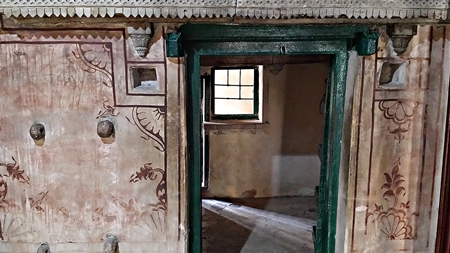
The village of Durgapur is 5 kilometres northwest of Mandvi. In the past, when the water table was higher, the land around this place was very fertile. The farmers who lived in Durgapur became quite affluent. Nowadays, the ground is unproductive, but the elegant, richly decorated houses of the village attest to its inhabitants’ former prosperity. Many of the houses have first floor balconies which project over the roadways. These balconies have lovely carved wooden balustrades and are shaded by canopies supported by carved wooden pillars and fringed by delicately carved strips of wood. Many of the older houses have crafted stone window frames and intricately decorated wooden entrance doors.

durg 3


Today, many houses in the village have been bought by wealthy folk from Bombay, who have also built new homes there. Recently, a large new health centre has been built by members of the Jain community for their own use.


durg 4

The author and his book…

ADAM GUJU BOOK

“Travels through Gujarat, Daman, and Diu” by Adam Yamey is a personal introduction to a part of western India far less well-known than its neighbour Rajasthan.

First, a bit about the author:

Adam Yamey is the author of several books, including: Albania on my Mind, From Albania to Sicily, Exodus to Africa, Rediscovering Albania, Aliwal, City on the Hooghly, Buried in Bangalore, Bangalore Revealed, and A Boer in Bangalore.

Born in 1952 in London, son of South African parents, he attended Highgate School, and then University College London. After a doctorate in mammalian physiology, he became an undergraduate once more and qualified as a dental surgeon. After 35 years in general dental practice in Kent and London, he retired in September 2017.

Amongst his many achievements, he has been Chairman of both the Maidstone Recorded Music Club and the Medway Association of Dentists. In August 2008, he gave an Independence Day speech to pupils of a school in northern Kerala. Some years later, he gave a presentation at the National Institute of Advanced Studies in Bangalore. More recently, he has been editing the newsletter of the Anglo-Albanian Association.

Adam married Lopa, from India, in 1994, and, since then, has been visiting her native land very frequently. India has become his second home. He is a keen traveller. The periods between his journeys are usefully and enjoyably employed with: family, cooking, writing, editing a newsletter, theatre, and exploring the many delights that London has to offer.


Here is the list of the contents of this profusely illustrated travel book:

The Firozpur Janta Express (‘p.’ = page. 7)

DAMAN: (p. 11) A Portuguese fort; Cutting chai; In jail

BOMBAY: (p. 28) A shortage of vultures

KUTCH MANDVI: (p. 31) Kutchi beer; Highgate in the heat; Marriage in Mandvi; Dhows

BHUJ: (p. 51) Palace of mirrors; The dairyman; Leaving Kutch

RAJKOT: (p. 65) Gandhi lived here; A famous pupil; Reserved for ladies

GONDAL and VIRPUR: (p. 80) The Buddhist caves

JUNAGADH: (p. 88) A lively bazaar; Fantastic tombs; The citadel; The Nawab’s dogs

PORBANDAR: (p. 108) City by the sea; Gandhi’s birthplace; Something fishy; A floating stone; Another bus

SOMNATH: (p. 136) The Queen’s temple; Krishna stood here

DIU: (p. 150) A border crossing; Portuguese traces; The Governor’s grandson; Towers of silence; Four bangles; A Governor’s insanity; Laxmi Park; The fire temple

BHAVNAGAR: (p. 193) A silver bracelet; A royal encounter; Constructing a cobra; Graveyard for ships

Leaving Saurashtra (p. 219)

BARODA: (p. 222) A market; Floors of glass; A deserted city; A voice from the depths; A military base

AHMEDABAD: (p. 257) Tree of Life; Lunch in a graveyard; Before the Taj Mahal; Books under a bridge; Gandhi and Le Corbusier; The heat of the day; Music at sunset

Epilogue (p. 297)

Glossary  (p. 299)

Potted history of Gujarat (p. 304)

Books consulted (p. 306)

Acknowledgements (p. 308)

Index (p. 310)

The book is available from on-line stores such as:

Amazon, bookdepository.com, & lulu.com

There is also a Kindle version called:

“Travelling through Gujarat, Daman, and Diu”

An underground well

VIRPUR STEP

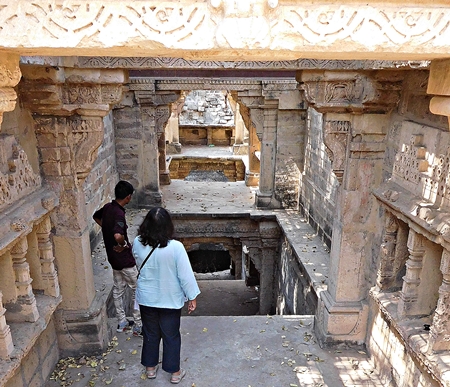
The step well at VIRPUR in Saurashtra is typical of the subterranean wells found all over the State of Gujarat. A series of staircases lead underground to a deeeply located well head. The staircases are connected with galleries through which light filters down to the depths. These wells often doubled up as meeting places for women and underground Hindu shrines. This well at Virpur is prized by women seeking enhanced fertility.

Learn much more about step wells in Adam Yamey’s book:

TRAVELS THROUGH GUJARAT, DAMAN, AND DIU

Available: https://www.bookdepository.com/Travels-Through-Gujarat-Daman-Diu-Adam-YAMEY/9780244407988

And on Amazon as well as Kindle

Gujarat and Sicily

Invaders adopting the architecture of the invaded

I have just returned from a trip to Palermo, the capital of the iskland of Sicily. This island has been invaded by different peoples numerous times. Visiting it made me reflect on aspects of my recent visit to Gujarat

FUS 1
The Zisa Palace built by the Normans near Palermo (Sicily)

In the 9th and 10th centuries (AD), Sicily was ruled by Muslim Arabs. They were displaced by Christian Norman invaders in the 11th century. Little remains of buildings erected during the Arab occupation, but people of Arabic origin remained behind in Sicily when the Normans arrived.

The Normans built castles, churches, and cathedrals in Sicily. Many of these may be viewed today. What interested me about them is that these structures contain many architectural features typical of Arabic architecture. I suspect that the Normans must have employed Arabic craftsmen during the construction of their buildings.

FUS 2
The Norman church of St Cataldo in Palermo

Moving eastwards to India, let us consider the architecture in Gujarat. Gujarat began to be invaded by Muslim forces (Turks, Mughals, etc) in the 14th century. Some Muslim rulers respected the Hindu religion they found when they arrived there; others did not. Hindu temples, like that at Somnath, were vandalised and destroyed. 

FUS 4
Recovered remains of an 11th century Hindu temple at Somnath (Gujarat)

Despite a prevailing prejudice against Hinduism, the Muslim invaders were content to borrow the architectural features of Hindu temples when they constructed their new (15th century, mainly) mosques. I have written more about this in an earlier blog article (see: https://gujarat-travels.com/2018/08/04/style-fusion-in-gujarat/ ).

FUS 3
A 15th century mosque at Pavagadh (Gujarat)

The invaders of both Arabic Sicily and Hindu Gujarat made use of the local architectural features they found when they arrived as conquerors, but they also introduced new architectural styles that they brought with them. The Normans brought northern Gothic, and the Muslim invaders of Gujarat imported Persian architectural ideas. Later, the British, having invaded India, managed to fuse features of gothic, Persian, Mughal, and Hindu architecture to create what is sometimes called “Indo-Saracenic”architecture. Many public buildings in Gujarat are fine examples of this Victorian era fusion.

FUS 5
Inside a 15th century Muslim mausoleum at Sarkej Rauza (Ahmedabad, Gujarat)

Discover more about Gujarat in the new book by ADAM YAMEY:

Travels through Gujarat, Daman, and Diu

It is available on lulu.com, Amazon, bookdepository.com, and Kindle


Happy birthday, Mr Gandhi!

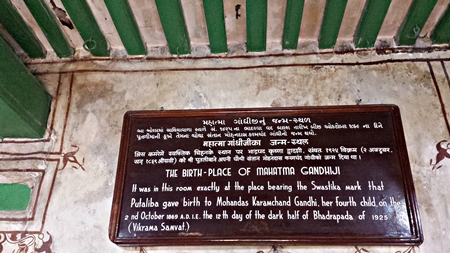
Mohandas K Gandhi, the Mahatma, was born in Porbandar (Gujarat) on the 2nd of October 1869. The house in which he was born still stands, and is now part of the Kirti Mandir memorial complex in the centre of Porbandar. Here are some photos of Gandhi’s birthplace that Adam Yamey took in March 2018:

gand 1


gand 0
Gandhi’s parents


gand 1a


gand 2
The swastika marks the spot where Gandhi was born


gand 3


gand 4


On the bus in Gujarat

Hop on a bus and travel through Gujarat: see the country and enjoy the people

More excerpts from “Travels through Gujarat, Daman, and DIU“, a travelogue by Adam Yamey, available HERE IN PAPERBACK and HERE ON KINDLE


BUS 0
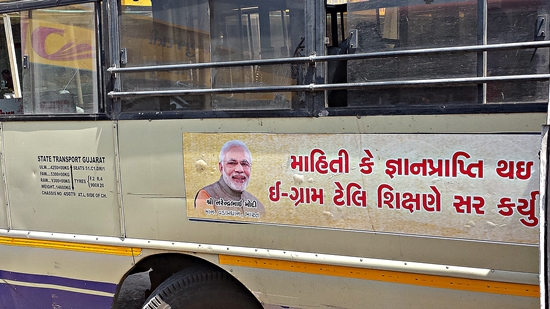
Narendra Modi on the bus

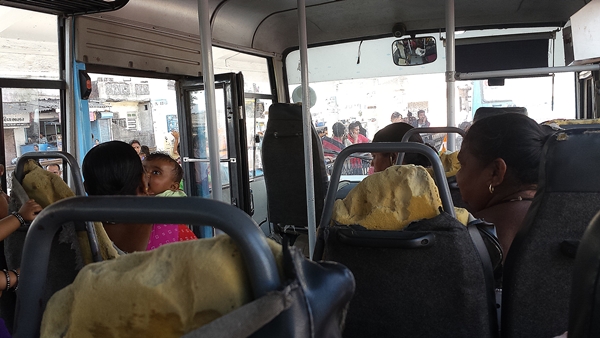
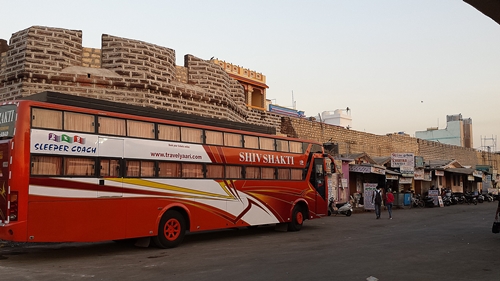
During our eight weeks of travelling through Gujarat, Daman, and Diu, we made much use of public transport. We used mainly buses. As in other parts of India, some buses are run by private companies, and other by the local state, in our case Gujarat, which operates under the name ‘Gujarat State Road Transport Corporation’ (‘GSRTC’). At the outset, we made the assumption that privately-run buses are bound to be better than those run by the state. It was only near the end of our travels that we discovered that we had made an erroneous assumption.


BUS 1 Daman
Local bus in Daman

Here are some extracts about buses in Gujarat from my book “Travels through Gujarat, Daman, and Diu”:

On a private bus between Junagadh and Porbandar:

BUS 4 to Porb

Our vehicle stopped frequently. Whenever the conductor saw someone standing by the side of the road, he leaned out of the open passenger door, shouting our destination repeatedly: “Porbandar! Porbandar! Porb…” More and more people boarded our small bus. All the seats became occupied as did the space at the front of the vehicle around the driver. As the bus picked up even more people, even the standing room became used up. People were jammed against each other and their arms and baggage invaded the seated passengers’ space. A lady began resting her bag on Lopa’s head. When she objected, the woman said: “Where else can I put it?” Another person almost sat on Lopa’s lap.

There was hardly any room for the conductor. He spent most of the journey leaning out of the passenger door. When Lopa asked him whether this was dangerous, he responded cheerfully that it was part of his job. After about an hour, when the bus was already incredibly crowded we stopped in a village where a large group of people were waiting for our arrival. The bus driver told the conductor that there was no room for any more people. The conductor ignored him and squeezed many new passengers on board.

BUS 2 Daman

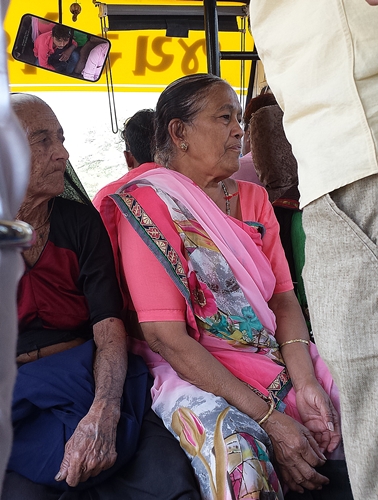
Our fellow passengers were a varied crowd. They included men with curling handle-bar moustaches wearing turbans and loose-fitting white kurtas with baggy trousers. Their clothes were often stained probably because they were worn whilst doing work on the land. At many rural stops, women wearing colourful garb boarded. Many of them were tattooed on whatever parts of their bodies that could be seen and probably also on parts that were not visible in public…

bus 6 Diu
Diu bus station

On a GSRTC bus between Diu and Bhavnagar:

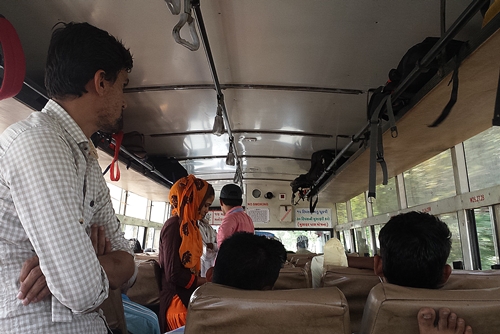
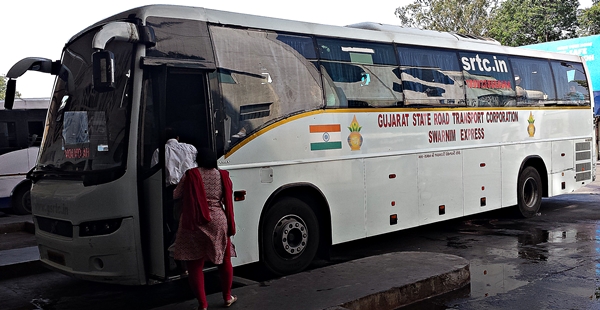
We boarded a bus belonging to the Gujarat State Road Transport Corporation (‘GSRTC’). This and other buses belonging to the state-run bus company are superior to any of the private busses we had travelled on. The GSRTC vehicles: are cleaner and more comfortable than the private ones; only stop at bus stands with good facilities; do not tout for business at random wayside stops; and do not admit more passengers than there are seats to accommodate them. We wished that we had not assumed, wrongly, that privately-run buses would be better than those run by the state.

BUS 7 Bhavnagar
Bhavnagar bus station

On a GSRTC bus to Ahmedabad:

We boarded the newest and most comfortable bus of our trip at Baroda bus stand. Part of the GSRTC fleet, it was a Volvo vehicle. These buses are held in high regard by Indians. As far as buses in India are concerned, they are regarded as Maharajahs amongst the myriad of road transport vehicles. The coach driver asked Lopa her relationship to me. She replied that I am her husband. The driver shrugged his shoulder and replied in Gujarati: ‘It happens’.

BUS 5 Veraval

Whether the bus is privately, or state operated, a ‘back-seat driver’ like me cannot avoid being aware of the adventurous driving  of the bus drivers:

BUS 8 Pavagadh

Our driver sped along the good roads leading towards the eastern edge of Saurashtra. He overtook frequently and usually hazardously. Often, he had his head turned towards the conductor sitting left of him, chatting with him, rather than looking ahead along the road in front of him. He also made frequent ‘phone calls to people with whom he was doing business, buying and selling vehicles.


BUS 9 Volvo
A GSRTC VOLVO bus