Books beneath a bridge

Another excerpt from

Travels in Gujarat, Daman, and Diu” by Adam Yamey

To be published very soon!


We were in Ahmedabad when…

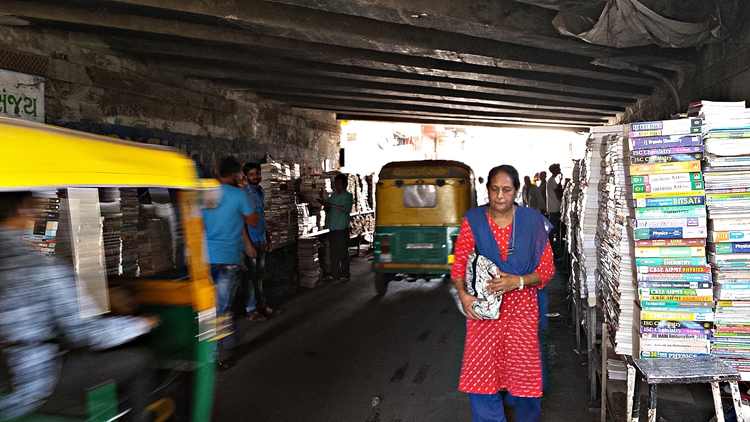
… we passed the now disused Indian Picture House, a cinema, and reached the bridge that carries Gandhi Road over Tankshal.


AHM 1


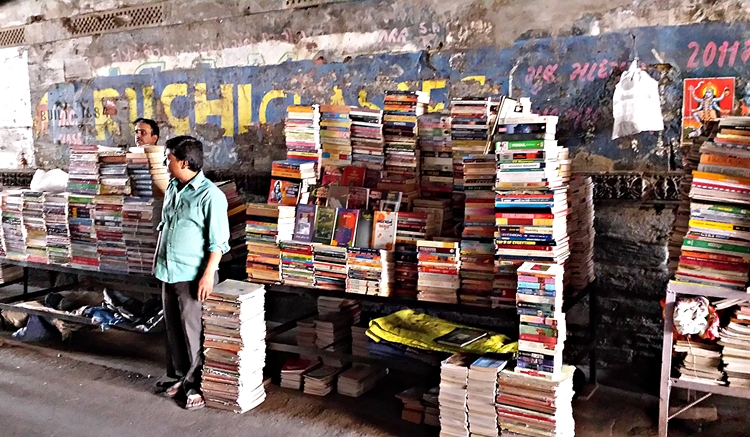
The road beneath the bridge is lined with booksellers’ stalls piled high with textbooks.

AHM 2

There are also bookshops around the bridge in yards leading off Tankshal Road. Outside their premises, there are tables which are overflowing with books, new and used. These precarious piles of books reminded me of my favourite bookshop in Bangalore, Mr Shanbag’s Premier Bookshop, which closed some years ago. In that great establishment, only the foolhardy customer would risk creating an avalanche of books by attempting to extricate a book from the piles of volumes reaching from the floor to the high ceiling.


AHM 4

We visited Mahajan Book Depot, where we had been told books in English were available. Its amiable owner, a descendant of the shop’s founder told us that his was the oldest bookstore in Ahmedabad. His great-grandfather established it in 1891. His stock of books in English was not great, but I found one, a history book, which I purchased.


AHM 3

Explore Gujarat soon…

Good news!


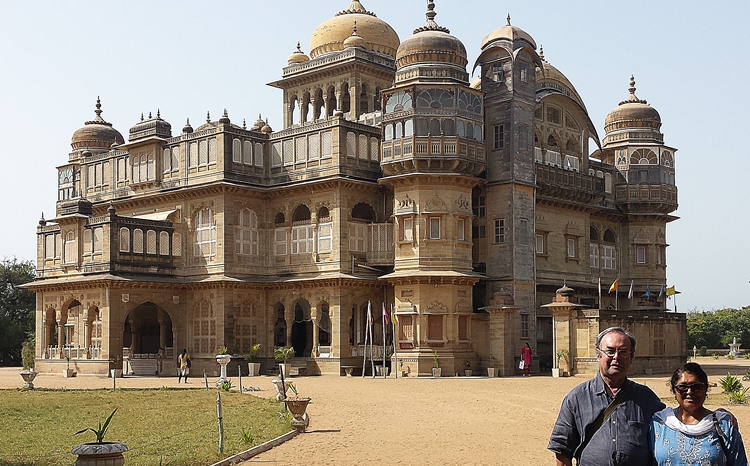
vijay vilas

Kutch Mandvi

I am awaiting the first proof copy of my new paperback “Travels through Gujarat, Daman, and Diu”.  Soon, I will also upload a Kindle version of the book.

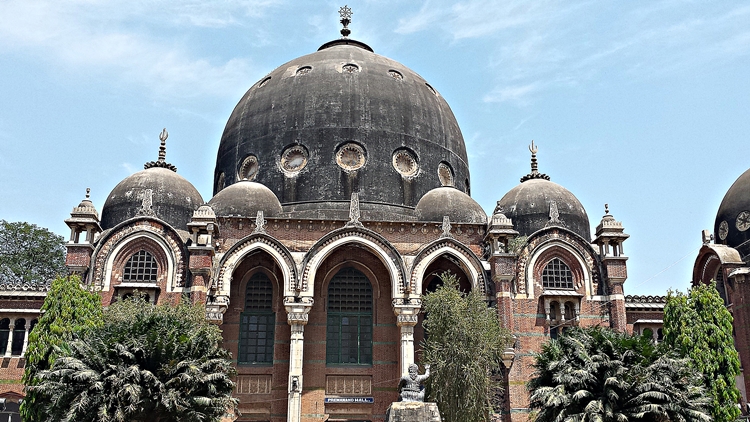
baroda

Baroda (Vadodara)

To whet your appetite, here is a list of places that get a mention in the book.

junagadh

Junagadh

The places listed are where we managed to explore to a greater or lesser extent during our two-month long trip to this part of western India:


Nagoya

Nagoa Beach, Diu


Adalaj, Ahmedabad, Alang, Baroda (Varodara), Bhavnagar, Bhuj, Bombay, Borsad, Champaner, Daman, Devka Beach, Diu, Durgapur, Fudam, Godhra, Gondal, Halol, Jetpur, Jinalaya Temple, Junagadh, Kandla, Keshod, Khamabalida Caves, Kutch Mandvi, Nagoa Beach, Pavagadh, Porbandar, Rajkot, Rajula, Sandipani, Sanjan, Sarkhej, Sevasi, Sihor, Silvassa, Simbor, Somnath, Talaja, Udvada, Una, Vapi, Varodara (Baroda), Veraval, Virpur.


sihor

Sihor

Indian Independence Day

porb

Gandhi in Porbandar

On the 15th of August 1947, India won its independence from the British Empire. Independence was achieved through the efforts of many men and women in the Indian sub-continent. The best-known of these is a Gujarati born in Porbandar, MK Gandhi, later known as the Mahatma.

Independence riders_640

Hyderabad, 2012

At the precise instant when India became independent, moments after the 14th of August had ended, Gujarat was still divided into many so-called Princely States, and the small enclaves of Daman and Diu were still Portuguese colonies. Through the efforts of the Gujarati Sardar Vallabhai Patel, the more than 500 Princely States of India were ‘encouraged’ to give up their autonomy to become integrated into the newly independent India. Daman and Diu only became part of India in 1961.


patel

Sardar Vallabhai Patel in Ahmedabad

Independence Day is celebrated throughout India. I have been in India several times on the 15t h of August and been privileged to watch flag-raising ceremonies that celebrate the important day when after centuries of foreign rule, the people of India were at last ruling themselves. Of these celebratory occasions, one stands out in my memory.

Back in 2008, we were travelling through northern Kerala on the 15th of August when I spotted a rural school amidst the palm trees close to the sea. The outer walls of the school were covered with colourful paintings including a map of India. We stopped so that I could take photographs of the pictures.


porb house

Doorway in the house where Gandhi was born, Porbandar

When I got out of our car, a teacher invited the three of us to enter the school where Independence Day celebrations were being held. We walked into a courtyard filled with school children standing in rows. The teacher invited us to join the school’s director and other teachers on a podium. Flower garlands were draped around our necks.

The director gave a speech and then introduced me as a “special guest from England”. Totally unprepared, I was then asked to address some words to the assembled school and its staff. Although I say so myself, I believe that I was able to improvise a short speech suitable for the occasion.

I felt honoured that I had been invited to give this speech, and gratified when the pupils mobbed me to shake my hands and even to take pictures of me.


Jai Hind_640

Gandhi in Bhavnagar … briefly

BHAVNAGAR is a fascinating city in the south of the Saurashtra region of Gujarat…

bh 1

Front of Neelambagh Palace  (now a hotel), Bhavnagar

MK Gandhi, the future ‘Mahatma’, wrote in his autobiography: “I passed the matriculation examination in 1887… My elders wanted me to pursue my studies at college after the matriculation. There was a college in Bhavnagar as well as in Bombay, and as the former was cheaper, I decided to go there and join the Samaldas College. I went, but found myself entirely at sea. Everything was difficult. I could not follow, let alone take interest in, the professors’ lectures. It was no fault of theirs. The professors in that College were regarded as first rate. But I was so raw. At the end of the first term, I returned home.

Having read this, we wanted to see the college. We took an autorickshaw to Samaldas Arts College, which is away from the city centre just over three kilometres southwest of the Gandhi Smrti. The college is laid out in a huge campus. Lopa waited in the shade whilst I walked along a busy private road linking the university’s well spaced buildings. There were many students going along it on foot and on two-wheelers. I reached an imposing stone building at the end of a short driveway. Outside its entrance, I saw an old school bell hanging from a wooden post. It looked Victorian in style and was topped with a metal model of a royal crown. I wondered if this was a memento from the days when the college was founded.  There was nobody in the building except a security guard, who only spoke Gujarati. I tried to ask him whether this was where Gandhi had studied, but he could not understand me.  Then I returned to the road, and asked a couple of passers-by, who did speak English, about Gandhi and Samaldas College. Their vague answers were uninformative.


bh 2

Former Samaldas College, Where Gandhi studied

We had a rest in our hotel next to the Neelambagh Palace after having had a delicious lunch at a brand-new restaurant called Sugar and Spice, which is near the Samaldas College. While I was relaxing, two things worried me about the campus that I had just visited. First, none of it looks old enough to have been present in 1887, when Gandhi attended it. Secondly, the place is too far from the what would have been the city’s boundary in Gandhi’s day. A little research on the Internet revealed that in Gandhi’s day, Samaldas College was nowhere near its present location, but in the centre of Bhavnagar.

bh 3

Classroom where Gandhi studied in Samaldas College

Having located the site of Gandhi’s college, we took an ‘auto’ to the Majirav Girls School on High Court Road. The bulk of the school is a two-storey building arranged around three sides of a large rectangular courtyard. As it was a Saturday afternoon, there were few pupils around. The security guards asked us our business. We told them that we wanted to see the college where Gandhi had studied. Someone went off to find the school’s Director, who kindly agreed to show us what we wanted to see. This lady, who has several degrees and a PhD in education, is a high-flyer in the education department of the State of Gujarat. She escorted us to a neo-gothic building attached to the rear of the school, and then asked us to wait beside a locked door.


bh 4

Detail of gateway into the old Royal Palace (‘Darbagadh’) of Bhavnagar

Eventually, somebody found the keys to the door and the Director unlocked it. We entered a large hall, two storeys in height, with a wooden ceiling. It is filled with gymnastic equipment because it is now used as the girls’ gymnasium. A small inscribed stone plaque on one wall below an old coloured photograph of the Mahatma reads (both in Gujarati and English): “The Samaldas College was founded in 1874 in this building. Mahatma Gandhi studied in this class room as a first-year student from January to June 1888”. The Director of the girls’ school told us that the class room where Gandhi had studied had once been the primary school of the Majirav School, but for a brief while it had been lent to Samaldas College, and that was when Gandhi attended it.


bh 5

An afternoon in Bhavnagar

You are being so lovable

diu 1

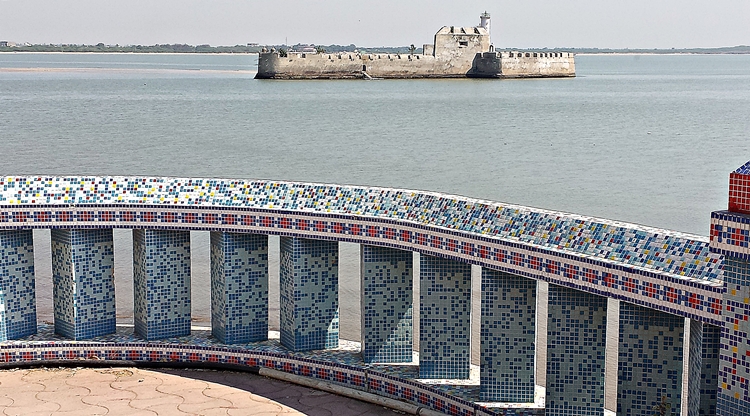
Pani Kotha Fort, Diu

Monday evening in Diu was peaceful and sleepy, the weekend having ended. As we ate dinner at a table on Apana’s terrace overlooking Fort Road, we remembered that at least three times that day, Indian tourists had asked to take photographs of Lopa with me. We agreed to this. The photographers must have considered us, an Indian with a European companion, an unusual couple. I recalled a situation some years earlier when I was taking a boat trip along the River Mandovi in Goa. I was the only man with a pale complexion on the crowded vessel. Some young men approached me, asking if they could take a photograph of me. I agreed. They said they wanted my picture: “Because you are being so lovable.”

diu 2

O Cocqueiro restaurant, Diu

Breakfast in Bhuj and Catherine Deneuve

3

Before breakfast, we rode the bus into town, and then visited the Hotel Prince, which was once rated as being the best hotel in Bhuj. It is elegant but dated. We sat down for what we hoped would be a grand breakfast in the first-floor restaurant. It was almost impossible to catch the waiters’ attention. They were all standing, as if glued to the floor, in front of a large television screen, watching a very gory, bloodthirsty film. When they finally attended to us, we were served a reasonable quality (but expensive) breakfast of eggs and potato parathas. When Philip Ward published his guide to Gujarat in 1994, he wrote that service at this hotel was slow. Nothing has changed since then.

2

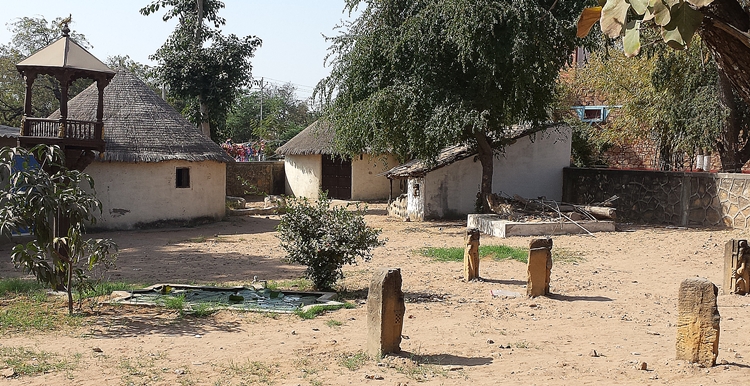
The Bharatiya Sanskriti Darshan is a privately-run folklore museum near the Collector’s Bungalow. This establishment and its collection were commenced more than sixty years ago by Ramsinhji Rathod, a Forest Service Officer and scholar of tribal and folk arts of Kutch. The museum’s buildings are in two adjoining plots separated by a narrow lane. One plot contains rectangular buildings without architectural merit. They hold the bulk of the exhibits. The other, a triangular plot, contains several round buildings with conical thatched roofs. These traditional Kutchi houses resemble South African rondavels.

4

The collection is first-class.  The wonderful array of exhibits includes: diverse household items; embroidered textiles (some of them with small pieces of mirror sewn in them) for which Kutch is famous; books in Sanskrit; boards for playing games; large printed fabrics; paintings and photographs; clothes and footwear; jewellery; household implements; and archaeological finds, including some well-crafted clay models excavated in northern Kutch at Dholavira, the ruins of a city that was founded in about 2650 BC, and was last occupied in about 1450 BC.

5

The circular buildings contain additional exhibits, predominantly a large collection of clay pots. We were shown around the museum by a lady volunteer. She is married to a professional singer of Gujarati and Kutchi songs. Proudly, she showed us videos of her husband performing at concerts.  She was accompanied by an employee of the museum, who was wearing one of Kutch’s many traditional colourful folk costumes. It was her job to unlock and lock the various rooms and huts containing the exhibits. She gave us some berries growing on a tree in the compound. They resembled soft cherries but tasted bitter. At the end of our tour, the volunteer invited us into her office, where we were asked to sign the visitors’ book. Then flicking back its pages, she showed us the flattering words that the French actress Catherine Deneuve had written about her visit to this lovely museum.

1

Helpful friends

Many people pour scorn on Facebook, especially those who have never used it.

Books in Ahm

Bookseller in Ahmedabad

I joined the social network when I began publishing books because I was told the “… it would help.”

It has helped in several ways. First, it can be used to publicise my books. Second, it attracts people to me, who share my interests. Thirdly, it has helped my writing.

Garlic Daman

Garlic seller in Daman

Many of my friends on Facebook are knowledgeable about a wide range of things. Recently, while researching my forthcoming book about Gujarat, Daman, and Diu, I have come across objects and inscriptions about which I wanted to know more. By posting queries on Facebook, often with images, people have either come to my assistance themselves of referred me to acquaintances who know about the topic of interest. These kind people have either provided me with a good answer or pointed me in the right direction.

When I joined Facebook, I never dreamed that it would be a useful source of information or even a place where I can ‘tap’ people’s brains.

I am very grateful to everyone who has helped me via Facebook.


Bats

Cricket bat sellers in Baroda

Delightful Daman

goa-damao-diu

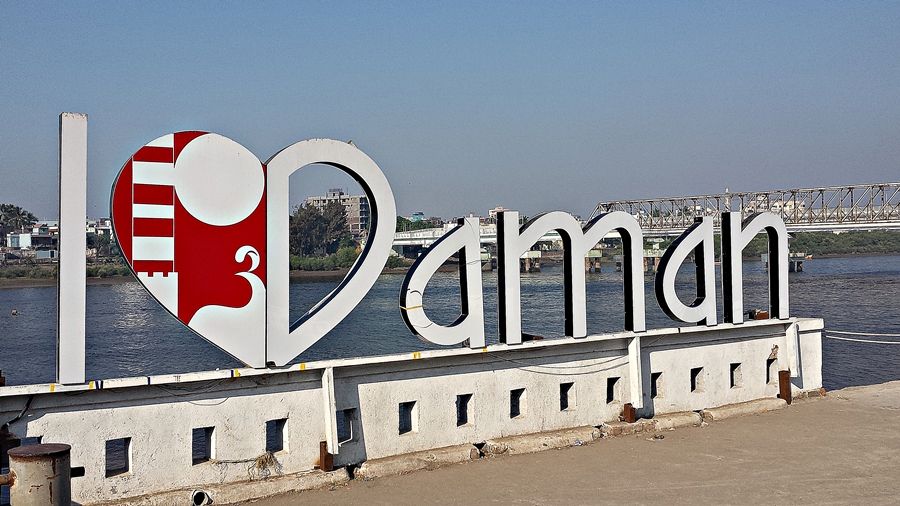
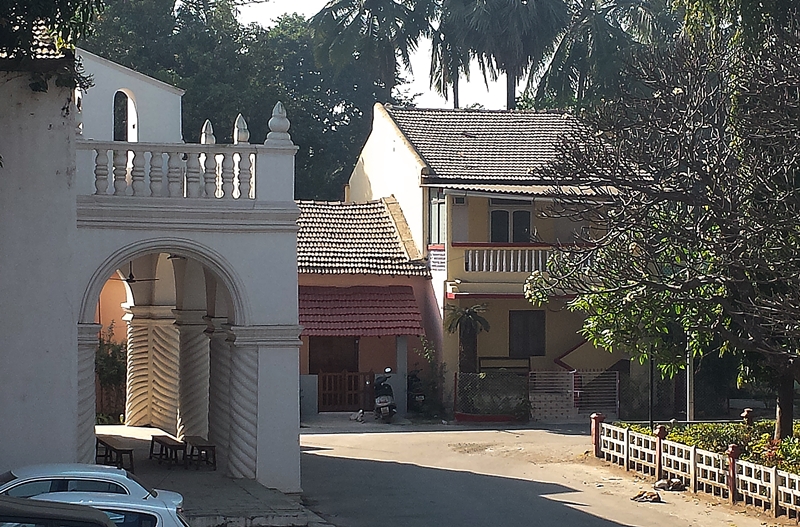
Just north of Bombay, the small territory of Daman, the city and its surroundings, located on the south coast of Gujarat, was a Portuguese colony from 1559, when it was finally taken from the Sultanate of Gujarat, until 1961 (when it became part of India). Daman was one of several Indian coastal colonies of Portugal, which included (moving from north to south): Diu, Cambay, Bassein, Chaul, Goa, Anjediva Island, Cannanore, Calicut, Cochin, Quilon, and Galle (now in Sri Lanka). Today, it is a vibrant little coastal place filled with remains and reminders of the former Portuguese Empire. Daman is part of the Union Territory of Daman & Diu , which is administratively separate from the State of Gujarat.

The city of Daman is divided by a river, the Daman Ganga, into two sections: Nani and Moti Daman. Nani means small in Gujarati, and Moti means large. However, Nani Daman is now larger than Moti Daman!
 

DAM 1


DAM 2

Moti Daman


DAM 3

Moti Daman fortress walls


DAM 7

Nani Daman market


DAM 6

Dominican Monastery in Moti Daman


DAM 8

Monument [in Moti Daman] to Portuguese soldiers who fell during the struggle for Dadra and Nagar Haveli in the 1950s


DAM 11

In Bom Jesus Church, Moti Daman


DAM 12

In Nani Daman


DAM 5.jpg

Fort St Jerome, Nani Daman

DAM 10

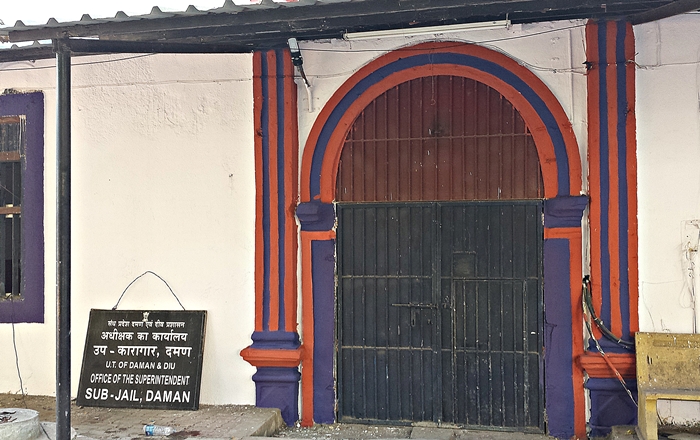
Jail in Moti Daman: contains a baroque era chapel
 

DAM 9

Nani Daman viewed from Moti Daman


Style fusion in Gujarat

Looks like a Hindu temple, but it’s actually a mosque!

somn

Hindu temple ceiling at Somnath

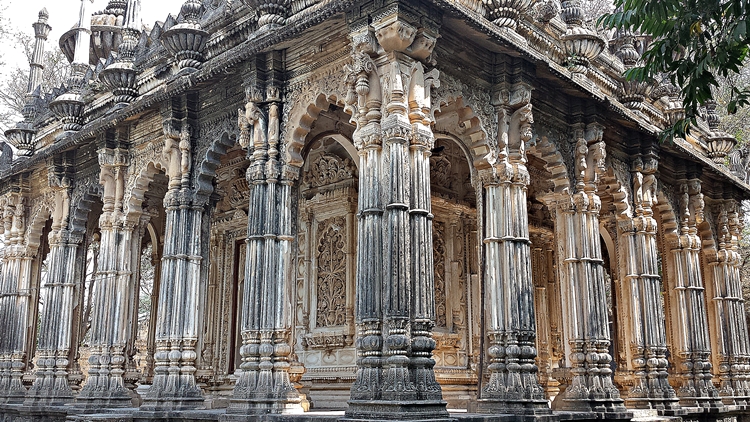
Turkic forces of the Muslim Delhi Sultanate began conquering parts of Gujarat in the 14th century. Even before that, Muslim forces had invaded the region. In the early 11th century AD, Mahmud Ghazni (971-1030) arrived at Somnath, and ordered the destruction of the great temple he found there. Zafar Khan (Muzaffar Shah I, died 1411), a Hindu who converted to Islam, later destroyed another temple built on this site. At least one Muslim ruler was tolerant of the Hindus and Jains living in Gujarat. According to Satish Chandra, author of History of Mediaeval India, Firuz Shah Tughlaq (reigned: 1351-88) encouraged the Hindu religion and promoted the worship of idols. Generally, the 14th and 15th century rulers of Gujarat were unlike Firuz with regard to tolerating Hinduism and its temples. Yet, the mosques and mausoleums they built show many influences of Hindu temple design.

When the Muslim regimes began to be established in Gujarat, they faced a problem, which is well put in Architecture at Ahmedabad by Theodore C Hope (1831-1916): “The problem which the Mahomedan dynasty and its newly-converted adherents set themselves to solve was extremely similar to that presented to the Christians in Italy some ten centuries earlier. In both cases the object was to convert a Pagan style of architecture to the purposes of a religion abominating idolatry.

Cham 2

Could be a Hindu or Muslim building: actually, it’s a mosque at Champaner

What resulted is what we found in Gujarat: 15th century mosques and Islamic mausoleums with significant architectural similarities to the local style of Hindu temple architecture of that era and before. What distinguishes Islamic buildings from the Hindu structures that influenced their design is the lack of figurative sculptures and decoration, and the presence of minarets and mihrabs. This fusion of styles is nicely put on a placard we saw at Sarkhej Rauza, a collection of Islamic buildings near Ahmedabad: “… the early Islamic architectural culture of the region, which fused Islamic influences from Persia with indigenous Hindu and Jain features … The architectural style of Sarkhej Rauza is a precursor to the Mughal period in a true amalgamation of Hindu, Jain, and Islamic styles. Hindu craftsmanship and construction know-how was overlaid on Islamic sense of geometry and scale


cham

15th century mosque at Champaner

Joy of discovery

Adventures in lesser-known India.

chakda

It’s on the way: a new book by Adam Yamey to be published before autumn

Almost wherever you live, you are bound to have met members of the Gujarati diaspora. Yet, Gujarat in western India, where they originated, is hardly known or visited by foreign and  Indian tourists.

My forthcoming book describes travels through an intriguing land with my wife. Her knowledge of Gujarati allowed us to speak with locals and gain their insightful views about Gujarat’s past, present, and future.

Join us in our adventures through the land where Mahatma Gandhi grew up and Lord Krishna ascended to heaven. Meet  the people, and discover places whose beauty rivals the well-known sights of Rajasthan, Agra, and Delhi.

chakkk